This review covers 12 to 19 November 2026, from 11:45am GMT on the 12th to 11:45am GMT on the 19th.
Nvidia has just reported quarterly revenue of nearly $116 billion. Britain's inflation rate has climbed to 3.6%. And the latest employment figures suggest the labour market is neither collapsing nor particularly enthusiastic about hiring.
Three stories, apparently unrelated.
Yet together they illustrate something important about the economy: extraordinary growth in one industry can coexist with stubbornly difficult conditions almost everywhere else.
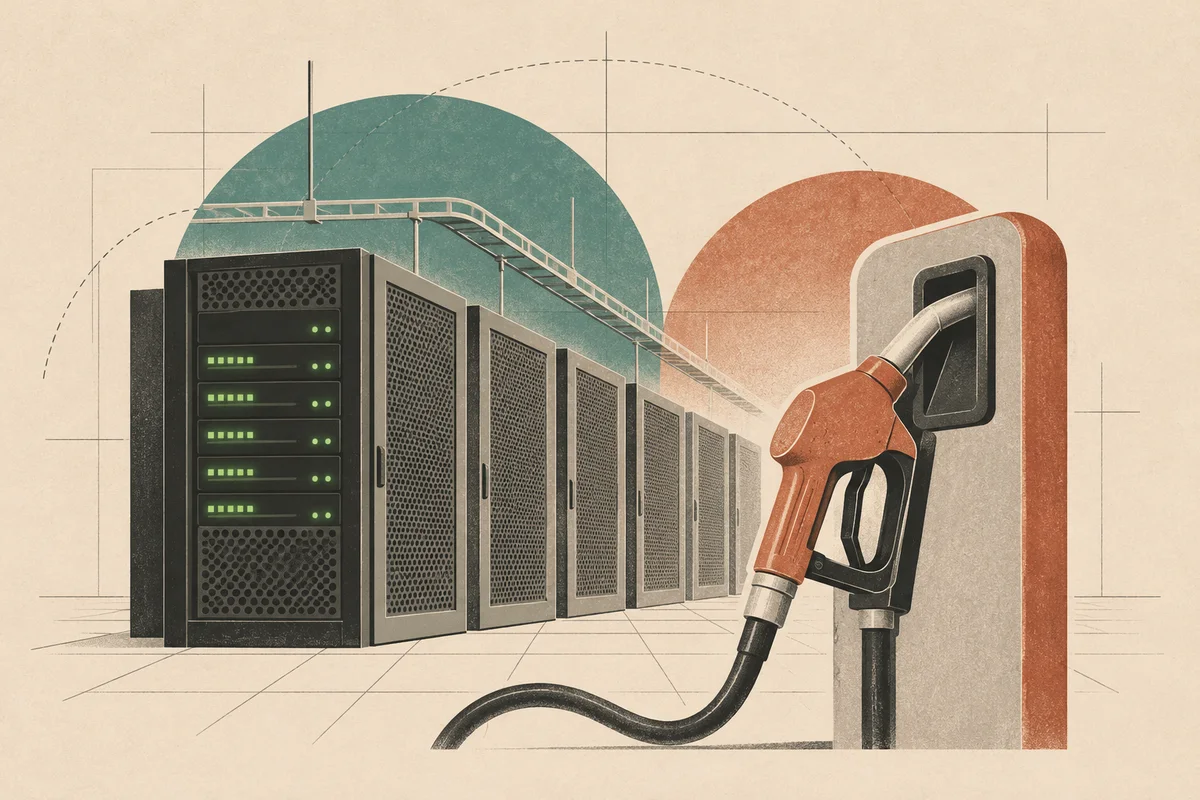
The future may belong to artificial intelligence. Unfortunately, the present still requires somebody to pay for petrol.
So, let's jump in.
The week at a glance
Nvidia: Apparently, $115.8 billion wasn't enough to settle the argument
On 17 November, Nvidia reported revenue of $115.8 billion for its third quarter of fiscal 2027, covering the period ending 25 October 2026.
That was 103% higher than a year earlier.
Its data-centre business contributed $107.6 billion, up 110% year on year. The company also reported a GAAP gross margin of 74.8%.
These are remarkable numbers. For every $100 of reported revenue, Nvidia retained almost $75 after the direct costs included in cost of revenue, before research, administration and other expenses.
Its customers are building increasingly sophisticated AI infrastructure, and Nvidia supplies much of the computing equipment required.
The commercial logic is attractive. Companies competing to develop AI capabilities need computing power. Nvidia sells the equipment that makes that competition possible.
It is rather like supplying shovels during a gold rush, except these shovels cost considerably more and the miners are some of the world's richest technology companies.
But an important question remains: how much economic value will Nvidia's customers eventually earn from all this investment?
Demand for computing infrastructure is clearly substantial. Whether every AI project delivers an attractive return is a separate matter.
And those two things should never be confused.
Britain: Inflation has returned to the conversation
The Office for National Statistics reported on Wednesday that UK consumer price inflation increased from 3.5% in September to 3.6% in October.
Transport, particularly motor fuels, made the largest upward contribution to the change in the annual inflation rate.
Core CPI inflation, which excludes energy, food, alcohol and tobacco, remained at 2.8%. Services inflation was also unchanged at 3.7%.
That distinction matters.
Higher fuel prices can push headline inflation upwards even when underlying domestic price pressures are relatively stable.
The Bank of England therefore faces an awkward judgement: how much should interest rates respond to an externally driven increase in energy costs?
Raising rates cannot manufacture cheaper oil. It can, however, reduce spending and borrowing across the wider economy.
Monetary policy is a powerful instrument, although occasionally it resembles trying to repair a leaking roof by making everyone in the house spend less money.
The Bank must also consider whether higher energy costs eventually feed into wages and other prices.
Employment: A stable headline with some uncomfortable details
Tuesday's labour-market release showed UK unemployment at 4.6% for July to September, down from 4.7% in the previous overlapping three-month period.
Employment reached an estimated 34.625 million people.
So far, reasonably encouraging.
But vacancies fell to approximately 690,000 for August to October, while annual regular-pay growth slowed to 3.5%.
The combination suggests an economy in which existing employment remains relatively resilient but employers are showing less appetite for additional recruitment.
For households, nominal wage growth is only part of the story. What matters is how much those wages can actually buy.
For businesses, weaker hiring may reflect caution about demand, costs or productivity.
Neither interpretation requires an imminent recession. But neither suggests a labour market bursting with confidence.
One story worth understanding
This week's most interesting contrast is between the extraordinary investment flowing into AI infrastructure and the much more ordinary pressures facing the broader economy.
Nvidia is benefiting from enormous capital expenditure by technology companies.
British households are facing higher fuel prices. Employers are becoming more selective. Policymakers are balancing inflation risks against economic activity.
The temptation is to describe one as the future and the others as temporary inconveniences.
But the economic connection matters.
Technology investment becomes genuinely transformative when it eventually produces better products, lower costs, higher productivity or new sources of income.
Buying computing power is an investment.
Creating lasting economic value from it is the achievement.
Friday’s releases and the week ahead
Friday 20 November: The ONS published October retail sales for Great Britain. The important distinction is between the value of goods sold and the actual volume purchased. Rising spending can reflect higher prices rather than more shopping.
Friday 20 November: The ONS published October public-sector finances for the UK. Borrowing and debt-interest costs provide another indication of the pressure on government finances.
Beyond those releases, attention will remain on how businesses and policymakers interpret persistent inflation alongside softer recruitment conditions.
The question for next week is not simply whether the economy is growing.
It is who is benefiting, who is paying, and whether the investment being made today produces something worthwhile tomorrow.